

Red Dog Saloon
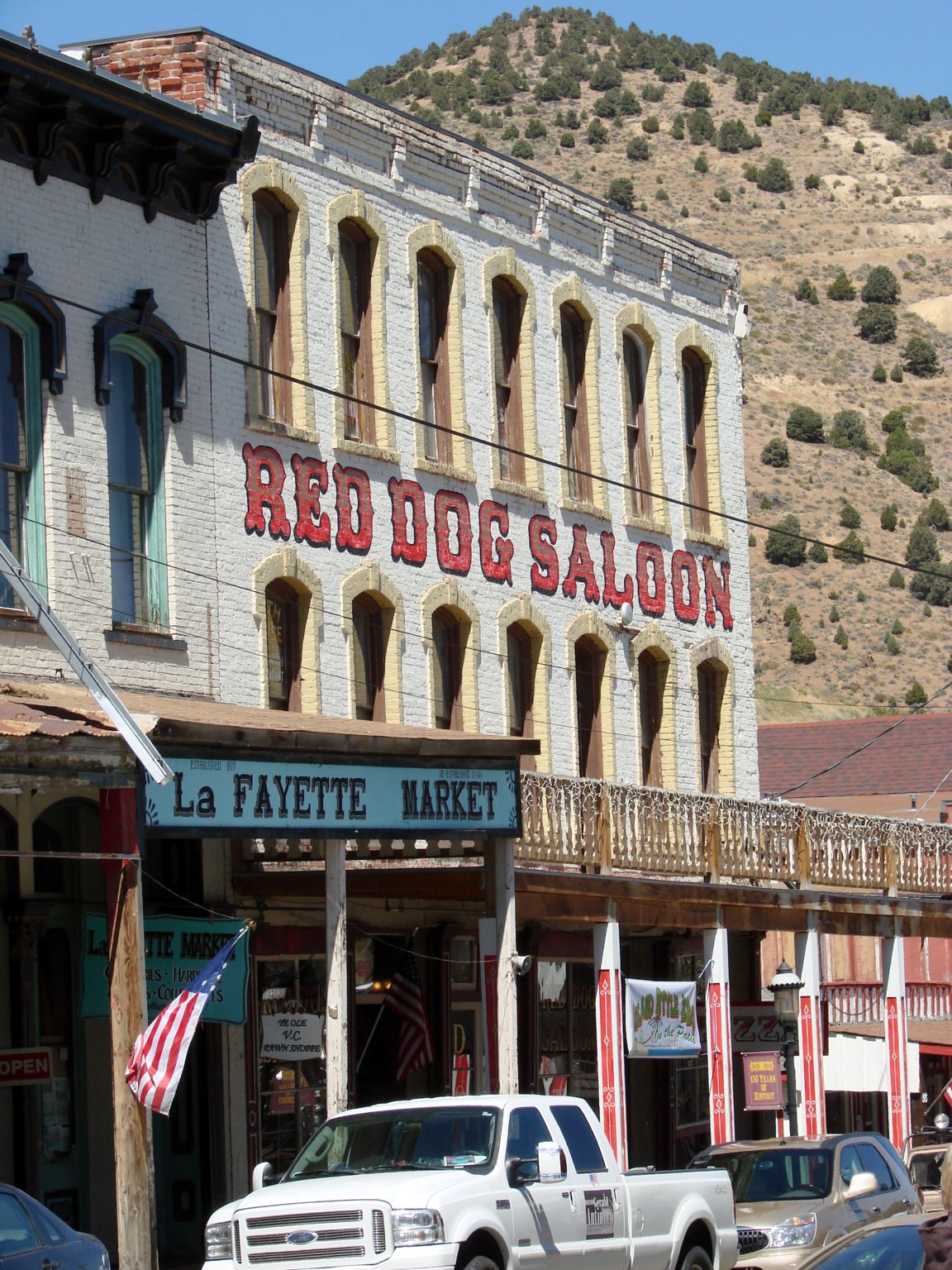
Photo: inkknife_2000, CC BY-SA 2.0 (Wikimedia Commons)
History
High on the flank of Mount Davidson, in the silver-mining town the Comstock Lode built and then half-abandoned, the Red Dog Saloon occupies a three-story building at 76 North C Street that long predates its moment of fame. It had stood faded and for sale for years when a folk-music enthusiast named Mark Unobsky bought it and, with Chandler Laughlin and Don Works and a crew of restorers, reopened it in the summer of 1965. Virginia City was the perfect stage set: a literal Wild West town where a band could dress in frontier-gambler finery and look not in costume so much as in residence.
What happened inside that summer is now treated as a genuine origin point. The promoter and broadcaster Chandler Laughlin — “Travus T. Hipp” — booked the talent, bringing up from San Francisco a band of art-school proto-hippies called the Charlatans. They became the house band across the summer. The opening night has passed into legend: most of the staff and band were dosed on LSD when they first took the stage. Against the wall behind them, Bill Ham pulsed gooey, color-saturated projections in time with the music — a pioneering use of liquid light projection in the rock context (the technique itself predates him).
The Red Dog crowd did not stay in Nevada. When several who had spent that summer running the saloon — among them poster artist Alton Kelley, Luria Castell, Ellen Harmon, and Jack Towle — drifted back to San Francisco, they formed the collective they called the Family Dog, and in October 1965 threw the first true psychedelic dance-concert at Longshoremen's Hall. The saloon itself survived: it still stands today, open as a bar and live-music room, trading openly on its standing as a birthplace of the scene.
Its Place in the Scene
The Red Dog Saloon is the great geographic outlier of the San Francisco psychedelic story — a venue that sits a hundred miles east, across a state line, in Nevada, yet is widely regarded as the spark and proto-template of the entire San Francisco scene. The “Red Dog Experience” of summer 1965 fused folk, frontier theatricality, communal living, hallucinogens, and Bill Ham's pioneering light shows into a template the city's ballrooms would scale up a year later.
Two foundational figures got their start here. Bill Ham brought his liquid light projections to the saloon's wall in 1965, helping carry the form into the rock era. And the venue is the birthplace of “The Seed,” the handbill the Charlatans' George Hunter and Michael Ferguson made to announce their residency — popularly traced as the first psychedelic rock poster, the headwater of the whole tradition. For a building in a Nevada ghost town, the Red Dog cast an outsized shadow over a scene everyone else locates squarely in California.